
Business process automation
Automating repetitive business processes
We automate repeatable steps so work advances on time and the team always knows what happens next. GoMedia adapts the automation to the way your team already works.
What automation gives the team
Repeatable steps happen automatically
Information moves between email, spreadsheets and systems without the same details being entered again.
Work reaches the next stage on time
A check, routing step or notification starts when the agreed conditions are met.
The team sees the status and next action
Every task shows what is complete, what is in progress and what happens next.
What the first automation may include
- A clear flow from start to result
- Automated rules and next actions
- One complete automated workflow
- Connections, statuses and notifications
- A team view with statuses and an agreed success measure
GoMedia adapts automation to the way your team works
We start from the existing process
We follow one task from start to result and identify the steps that can run reliably on their own.
We preserve a complete history
We connect each event to the right order, customer or task, keeping its full history in one place.
From a repeatable task to the first automated workflow
Where automation helps
We follow one repeatable task and identify the steps where automation creates the most value.
Rules and next actions
We connect clear conditions to the appropriate status, notification or next stage.
First automated workflow
We automate one complete part of the process, test the usual situations and show the team how to follow its progress.
How GoMedia chooses the first process to automate
A repeatable task
We follow one typical task from start to result and identify where information comes from and when each stage is complete.
Automation rules
We connect steps with clear conditions to the appropriate next action.
What we agree before development
- First-stage users, roles and the primary journey
- Required data and how it will be managed
- Connected systems and available test environments
- Important edge cases, permissions and notifications
A complete ordering flow
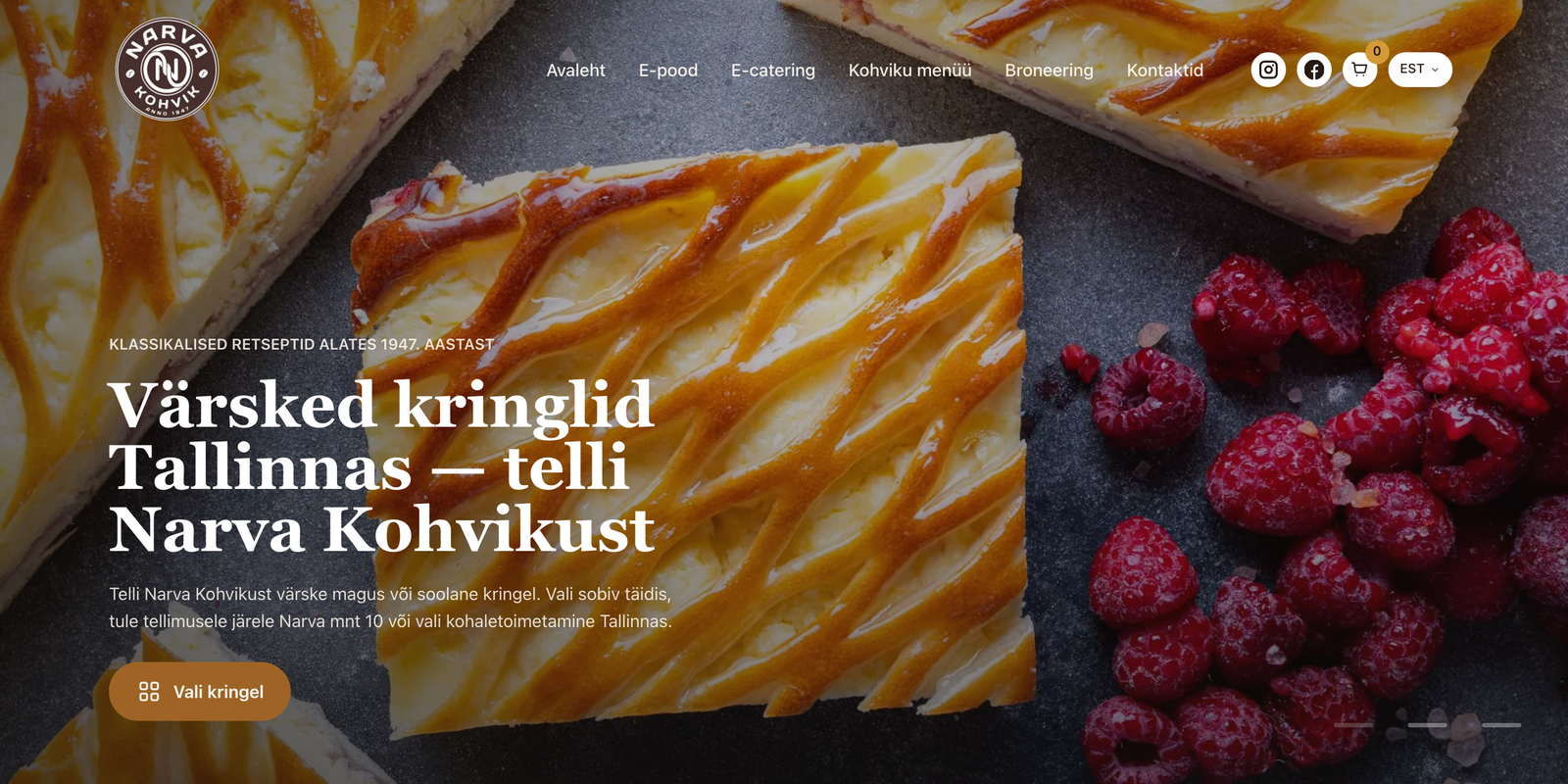
For Narva Kohvik, GoMedia connected the catalogue, product options, quantities, cart and delivery or pickup choices in one online store.
Automation with a clear next action
At launch, the team can see what is complete, what is still running and what happens next. GoMedia hands over the working view, statuses, notifications and operating guidance. We assess the impact against the chosen measure and select the next automation opportunity from real use.
Automation questions
Where should automation begin?
GoMedia helps identify a repeatable task with a clear start and useful result, then proposes a suitable first stage.
Does automation always mean AI?
Not always. Many tasks can be automated with clear rules and connections between existing systems. We use AI only when it adds clear value to the task.
How is impact measured?
Before the change, we choose a measure such as handling time or cases that need correction. We review it after launch.